

Lisbon’s Marquês de Pombal and Amoreiras give you a way to see the city beyond its central streets, with a major metro interchange, a garden shaped by Lisbon’s silk-making history and local cultural landmarks.
- Metro: Marquês de Pombal station sits at Praça Marquês de Pombal and connects the Blue and Yellow lines.
- Garden history: Jardim das Amoreiras was designed and inaugurated in 1759.
- Local character: The garden is surrounded by former silk-worker houses, a museum in a restored silk factory and aqueduct arches.

Orienting yourself around Marquês de Pombal
Praça Marquês de Pombal is the key reference point for getting oriented, with the metro station located in the square. The station opened in 1959, when Lisbon Metro service began, and was formerly called Rotunda.
From Marquês de Pombal, the Blue Line runs toward Avenida, Restauradores, Baixa-Chiado, Terreiro do Paço and Santa Apolónia, in that order. On the Yellow Line, Marquês de Pombal lies between Picoas and Rato, giving you another way to continue across the city.
According to Lisbon Metro, bus connections at the station include routes 702, 711, 712, 720, 723, 727, 732, 736, 738, 744, 746, 748, 753 and 783, as well as Aerobus 1 and 2.
Services and access arrangements can change, so check the official site before you go. Marquês de Pombal station is about a five-minute walk from Magnolia Guesthouse, a guesthouse base for exploring the neighbourhood.
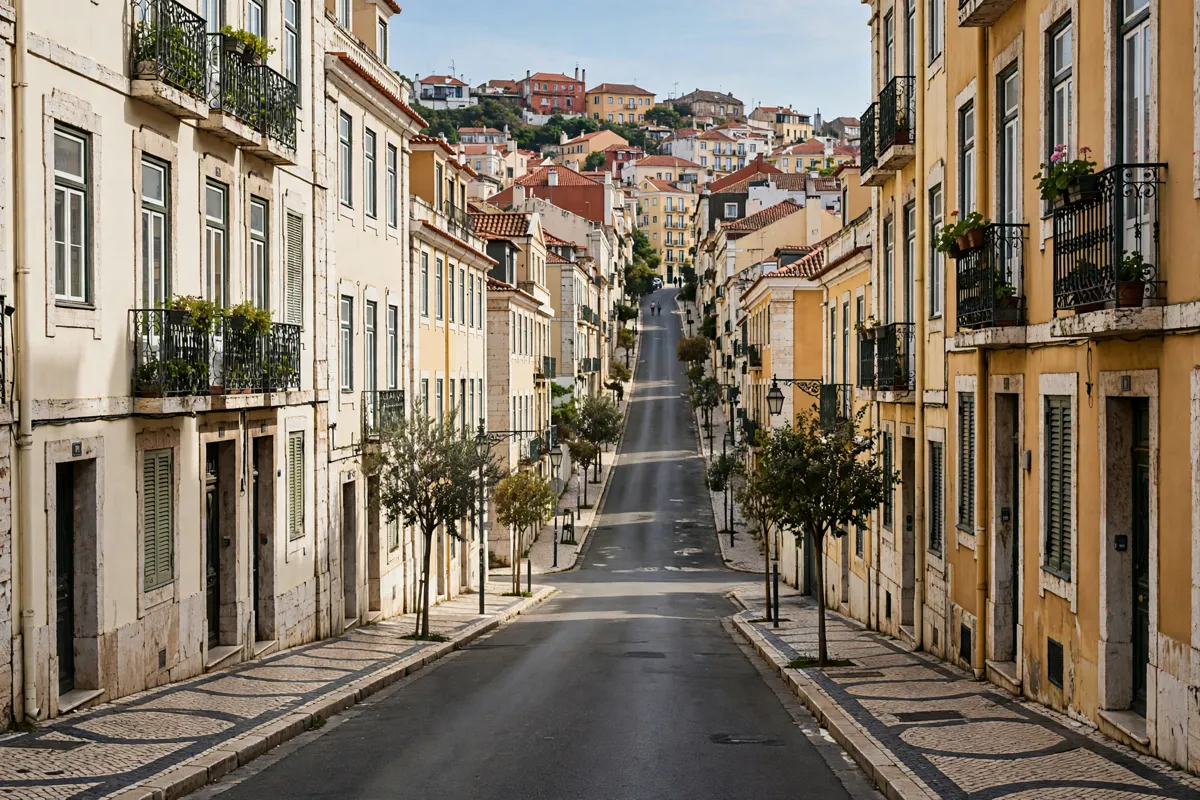
Walking toward Amoreiras
Amoreiras offers a change of pace from the metro interchange, with historic buildings and a garden at its centre. Jardim das Amoreiras is also known as Jardim Marcelino Mesquita; the Marquis of Pombal designed and inaugurated it in 1759, planting 331 mulberry trees.
Look around the garden’s edges for the 18th-century houses built for silk workers. The surrounding sights also include the Arpad Szénes-Vieira da Silva Museum, housed in a restored silk factory, decorative panels on Rua das Amoreiras and the Nossa Senhora de Monserrate chapel beneath the aqueduct arches.
These details make the garden a useful starting point for noticing how the neighbourhood’s architecture connects to its past. The Reservatório da Mãe d’Água das Amoreiras adds another stop to an Amoreiras outing.
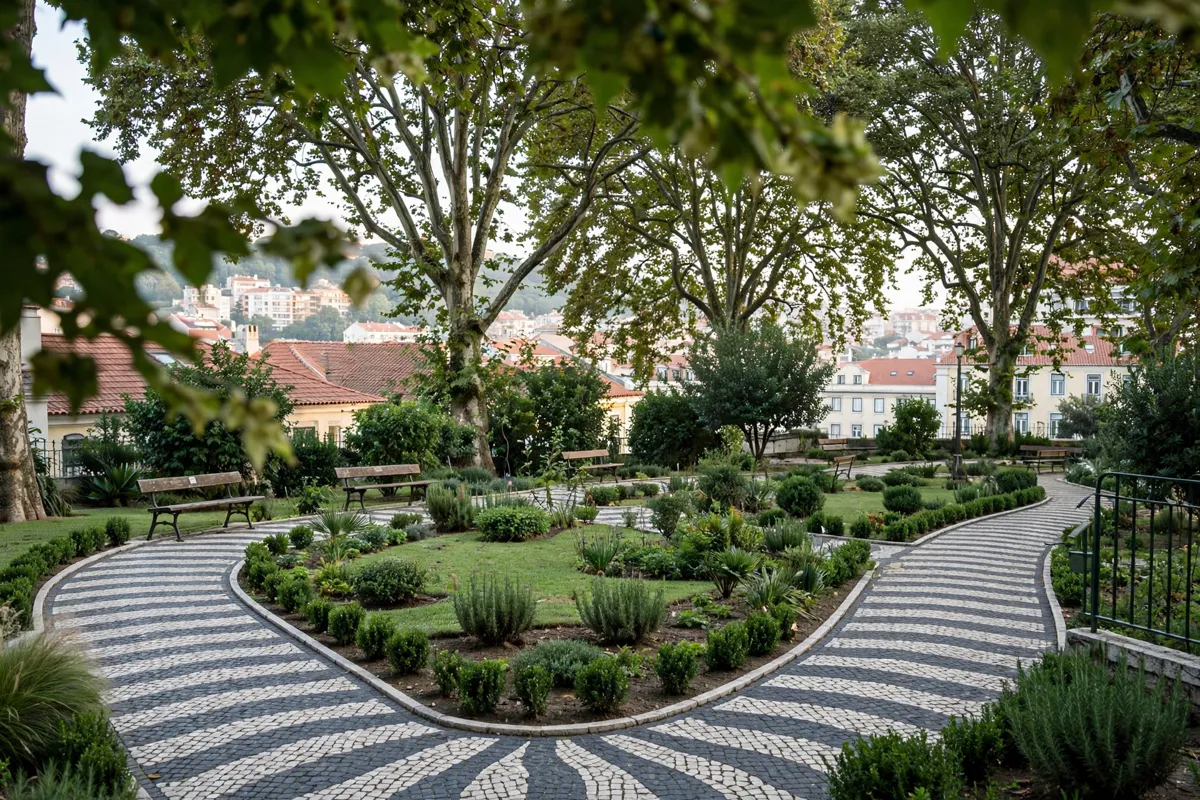
Nearby parks and gardens
Jardim das Amoreiras puts historic garden design and surrounding architecture in the same compact setting. Its mulberry trees recall the silk trade, while the former workers’ houses and the chapel beneath the aqueduct arches show how the area grew around that industry.
For another green space in the neighbourhood, Jardim Camilo Castelo Branco offers a change of scene. Parque Eduardo VII is another landmark; a guide to what to see in Parque Eduardo VII can help you plan a separate visit.

Local museums and architecture
Amoreiras pairs cultural sites with architecture rooted in the area’s history. The Arpad Szénes-Vieira da Silva Museum occupies a restored silk factory, while the decorative panels on Rua das Amoreiras and the Monserrate chapel beneath the aqueduct arches add details to notice as you walk through the neighbourhood.
The Museu Medeiros e Almeida visitor guide covers another museum. The Reservatório da Mãe d’Água is another architectural landmark to include in a walk through the area.
Connecting with central Lisbon
Marquês de Pombal is a practical starting point for continuing toward central Lisbon by metro. Follow the Blue Line sequence through Avenida and Restauradores to Baixa-Chiado, then onward to Terreiro do Paço and Santa Apolónia. The Yellow Line connects the station with Picoas and Rato.
The station was among 11 stops in the first phase of the first stage of Lisbon Metro construction. Its place at the meeting point of the Blue and Yellow lines still makes it a useful junction when you’re planning a route between Amoreiras and the centre.
FAQs
Which metro lines serve Marquês de Pombal?
The station connects the Blue and Yellow lines. It is located at Praça Marquês de Pombal.
What is the history of Jardim das Amoreiras?
The Marquis of Pombal designed and inaugurated the garden in 1759, with 331 mulberry trees. It is also called Jardim Marcelino Mesquita.
Does Marquês de Pombal station have step-free access?
The station has a lift connection between the street and lobby, with lift links between the platforms and lobby as well. Check the Metro operator’s official site before you travel for current access details.